
Language English

Health Tips

Six major types of pectus excavatum

Six major types of pectus excavatum

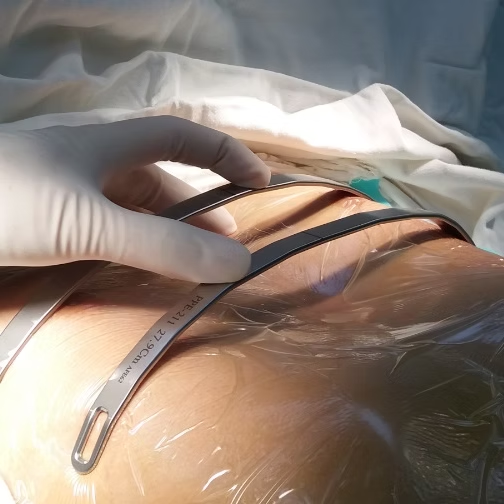
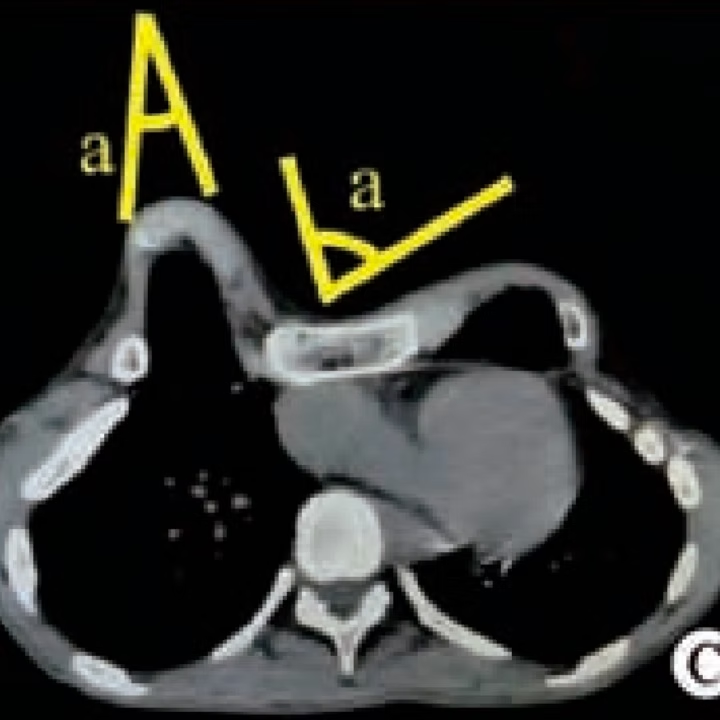
Not all pectus excavatum presents in the same way. From narrow indentation to wide, extending depression — this common chest wall deformity appears in many forms. Understanding the differences is the first step toward the right treatment. Symmetrical Pectus Excavatum Symmetrical pectus excavatum is characterized by a centrally located depression in the lower anterior chest wall, with the deepest point typically at the sternum or xiphoid process, and in some cases, below the

What is Pectus Excavatum?

What is Pectus Excavatum?

Get clear-cut answers in this Pectus Excavatum FAQs: learn what pectus excavatum is, its genetic links, symptoms, whether it worsens with age, and proven non-surgical & surgical treatments.

What Causes A Barrel Chest?

What Causes A Barrel Chest?

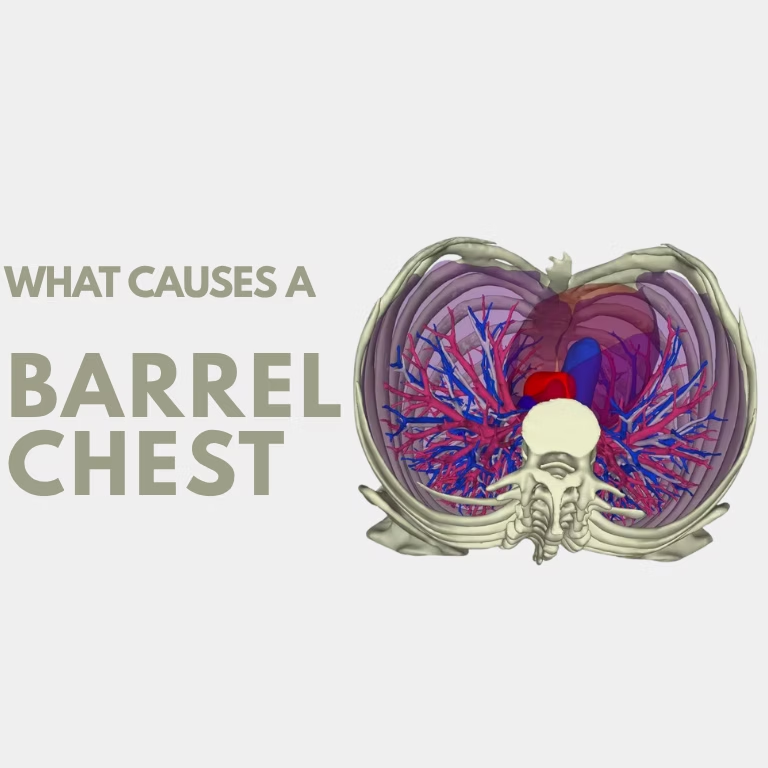
Explore the causes of barrel chest, including primary and secondary types, and available treatments such as the Wenlin procedure.

Pectus Carinatum Surgery: What You Need to Know

Pectus Carinatum Surgery: What You Need to Know

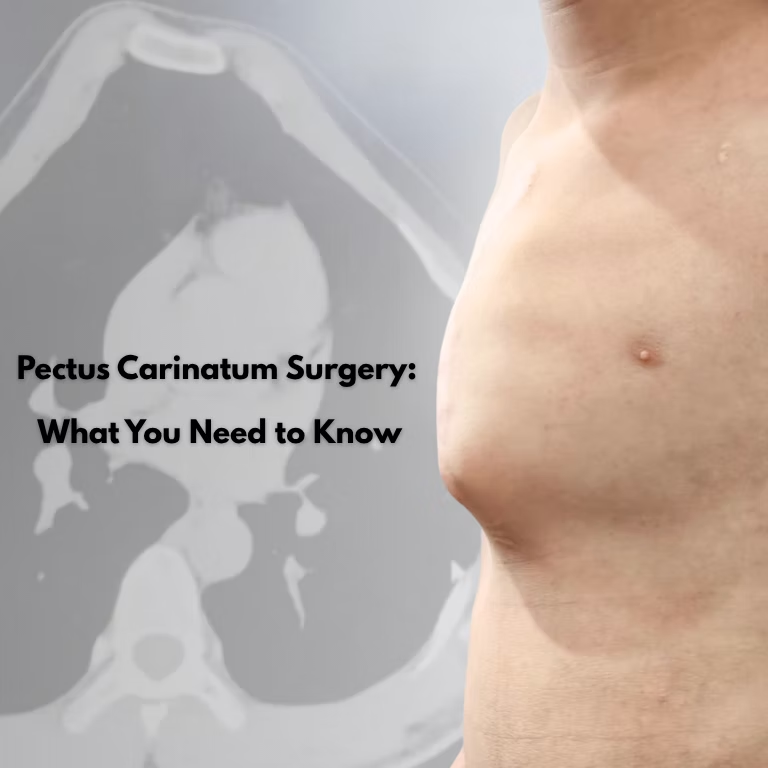
Considering pectus carinatum surgery? This guide will help you understand the diagnostic process, determine if you're a candidate, and compare the key surgical options, including the Ravitch, Abramson, and Wenlin procedures.

What is Acute Angle Deformity?

What is Acute Angle Deformity?

Acute angle deformity refers to a specific type of localized deformity where a sharp angle forms in areas of significant protrusion or depression of the chest wall. This malformation does not exist independently but rather manifests as a feature within a diverse range of chest wall deformities, encompassing single deformity such as pectus excavatum and pectus carinatum, as well as various complex deformities. ​ Acute angle deformity is most commonly seen in cases where pectus

What is Paradoxical Breathing?

What is Paradoxical Breathing?

Paradoxical breathing is an abnormal respiratory pattern characterized by the chest or abdomen moving in the opposite direction to normal respiratory motion. ​ Under normal circumstances, the chest wall expands and the abdomen protrudes during inhalation, while the chest wall contracts and the abdomen sinks during exhalation. In paradoxical breathing, however, the chest wall collapses and the abdomen sinks inward during inhalation, and protrudes outward during exhalation. ​ T