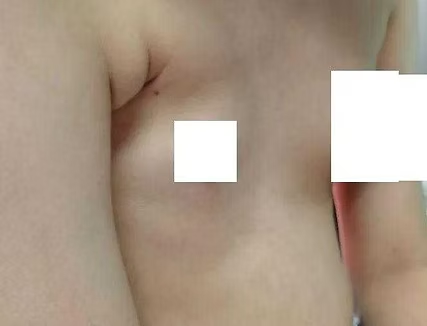
Poland Syndrome is a relatively uncommon condition that involves various deformities. It is characterized by the congenital underdevelopment or absence of the bony and soft tissue structures of the chest wall, including the absence of the pectoralis major, pectoralis minor, and ribs. This can lead to abnormalities in the upper limb on the affected side, such as finger absence, syndactyly (fused fingers), brachydactyly (short fingers), and carpal hypoplasia, as well as in the breast and other areas.
Furthermore, Poland syndrome is more commonly seen on the right side, less frequently on the left side, with occasional cases involving both sides.