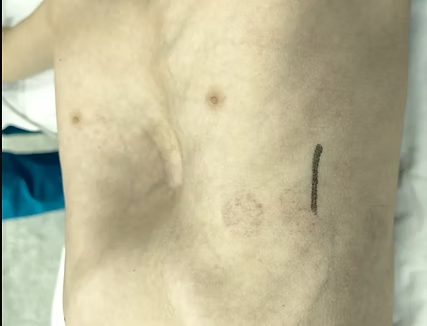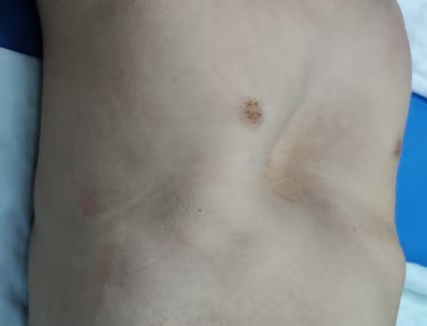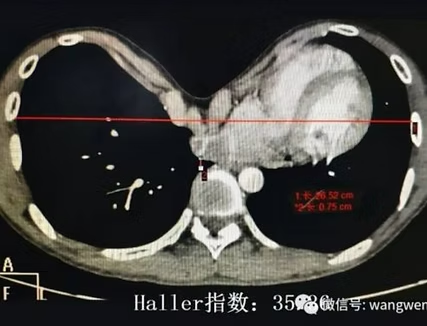
Pectus excavatum is a common congenital chest wall deformity, characterized by an inward depression of the lower and middle parts of the sternum and its adjacent ribs, forming a funnel-like shape. The deepest part of the depression typically resides superior to the xiphoid process. Pectus excavatum is a common congenital chest wall deformity, characterized by an inward depression of the lower and middle parts of the sternum and its adjacent ribs, forming a funnel-like shape.
Introduction
Causes
The exact cause of pectus excavatum remains unclear, but the genetic factor is believed to be involved. Additionally, delayed development of the diaphragm behind the sternum during embryonic growth, or excessively rapid growth of the costal cartilage below the sternum, might also exert a pulling force on the sternum, ultimately leading to an indentation of the anterior chest wall. The exact cause of pectus excavatum remains unclear, but the genetic factor is believed to be involved. Additionally, delayed development of the diaphragm behind the sternum during embryonic growth, or excessively rapid growth of the costal cartilage below the sternum, might also exert a pulling force on the sternum, ultimately leading to an indentation of the anterior chest wall.
Symptoms
Mild pectus excavatum typically does not lead to serious health issues or symptoms. However, in severe cases, the indented chest wall can compress the heart and lungs, causing symptoms like palpitations, shortness of breath, and breathing difficulty. Additionally, patients may experience a loss of appetite, indigestion, delayed growth, frequent upper respiratory infection, and increased psychological stress.Meanwhile, pectus excavatum can also lead to scoliosis, a condition that is more common in patients with severe deformity or those who have had the condition for many years. Mild pectus excavatum typically does not lead to serious health issues or symptoms. However, in severe cases, the indented chest wall can compress the heart and lungs, causing symptoms like palpitations, shortness of breath, and breathing difficulty. Additionally, patients may experience a loss of appetite, indigestion, delayed growth, frequent upper respiratory infection, and increased psychological stress. Meanwhile, pectus excavatum can also lead to scoliosis, a condition that is more common in patients with severe deformity or those who have had the condition for many years.