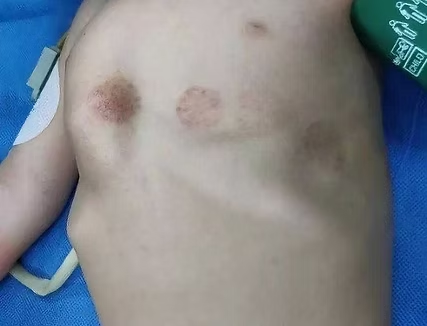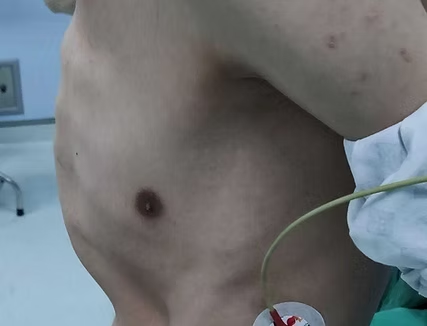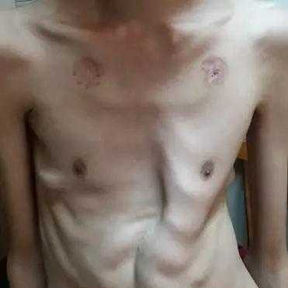
Complex chest wall deformities generally refer to conditions where both concave and convex deformities are present on the anterior chest wall. While certain malformations, such as grooved chest, saddle chest, Wenlin chest, and Poland syndrome, also exhibit both depressions and protrusions, they are not classified as complex deformities due to their distinct appearance and fixed patterns of concavity and convexity. It is essential to distinguish these malformations from true complex chest wall deformities.
In contrast, complex chest wall deformities is more intricate and variable. The appearance of the deformities, and the manifestations of the depressions and protrusions varies from person to person, with no consistent pattern. Generally, this term encompasses a broad range of abnormal chest wall conditions characterized by both concave and convex deformities in diverse and complex forms.