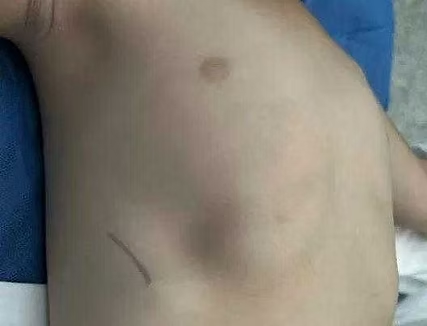
Depression of lateral chest wall, a relatively rare type of chest wall deformity, refers to a significant indentation of the lateral chest wall with a clear base and elevated edges. Although its external appearance bears some resemblance similar to pectus excavatum, there are significant differences between the two. The affected areas of depression of lateral chest wall are limited only to the ribs and costal cartilages, while the sternum remains in a normal state with no abnormalities. In contrast, pectus excavatum is a condition that inevitably affects the sternum. Therefore, in terms of medical classification and treatment, depression of lateral chest wall and pectus excavatum have fundamental differences, which means that the treatment methods for the former cannot simply apply the traditional surgical approaches used for pectus excavatum, such as the classic Nuss procedure.
Introduction
Causes
The exact cause of primary depression of lateral chest wall remains unclear. Secondary depression of lateral chest wall is often caused by empyema, with the root cause being the traction exerted on the chest wall by the fibrous structures on the inner side following pleural thickening. In addition, secondary depression of lateral chest wall can also occur after chest wall trauma. If the bone structure of the chest wall suffer extensive damage and is not securely fixed during surgery, a depression deformity may occur.
Symptoms
When the depression is severe and compresses the heart and lung, patients may exhibit obvious clinical symptoms, manifesting as chest tightness, shortness of breath, palpitations, chest pain, and other respiratory and circulatory discomforts. Additionally, some patients may also exhibit scoliosis.