
Language English

GROOVED CHEST

Introduction

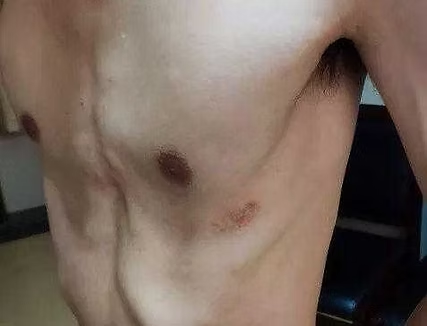
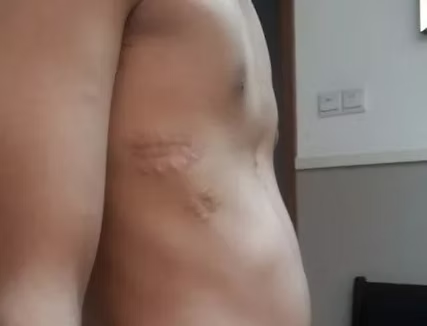
This deformity was often considered a type of pectus excavatum. However, due to its distinct characteristics and significant differences from pectus excavatum, the standard Nuss procedure is not suitable for correction. To facilitate its diagnosis and treatment, Dr. Wenlin Wang named it "Grooved Chest." 

Grooved chest is characterized by a horizontal groove-like indentation in the lower chest wall. This indentation is relatively shallow, with no significant height difference between the bottom and the edges, unlike what is typically seen in pectus excavatum.
Causes

The formation of grooved chest may be related to calcium deficiency and is thought to be a result of the continued development of Harrison’s groove. However, its exact cause requires further research and validation.

Symptoms

Patients with mild grooved chest usually do not exhibit noticeable symptoms. However, those with severe grooved chest may experience chest tightness, shortness of breath, and breathing difficulty, and some may even develop digestive system symptoms. These symptoms can worsen after intense physical activity and may progressively deteriorate with age. Additionally, patients with grooved chest may develop scoliosis.