
Language English

SADDLE CHEST

Introduction

Saddle chest is a relatively uncommon type of complex chest wall deformities characterized by distinctive morphological features. Therefore, to clearly distinguish it from other general complex deformities during diagnosis and treatment, Dr. Wenlin Wang named this specific condition “saddle chest.”

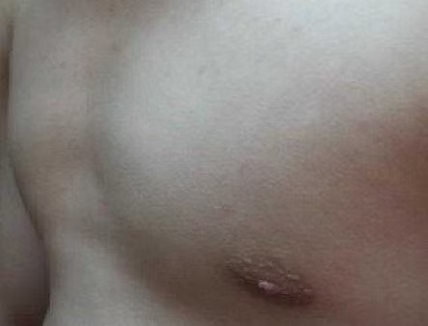
The main characteristic of saddle chest is the presence of symmetrical indentations on each side of the lower chest wall. The two depressions are not connected. Instead, they are separated by the normal height of the chest wall in the center, giving the overall chest wall the appearance of a saddle. Therefore, saddle chest is essentially a combination of two depressions of lateral chest wall.

Causes

The exact cause of primary saddle chest remains unclear. It may be associated with the development and advancement of Harrison’s groove; nevertheless, not all instances of primary pectus carinatum are correlated with Harrison’s groove.

Secondary saddle chest commonly develops after the Nuss procedure for pectus excavatum, representing a common complication of the surgery.

Symptoms

When the depressions are severe and compress the heart and lungs, patients may experience symptoms such as chest tightness, palpitations, chest pain, and even breathing difficulty. Additionally, the physical appearance of the malformation often causes feelings of inferiority in many patients, and can sometimes lead to varying degrees of psychological issues.