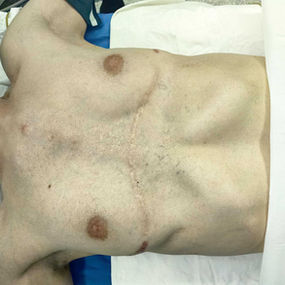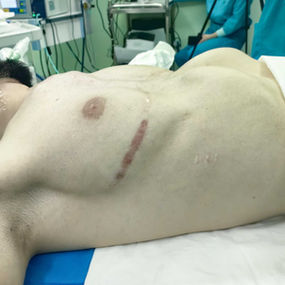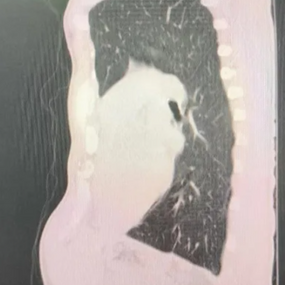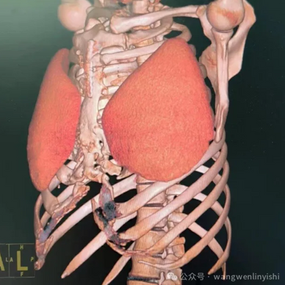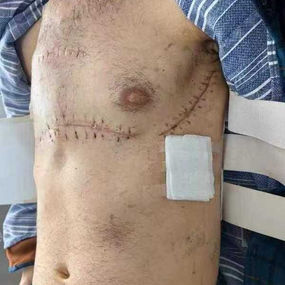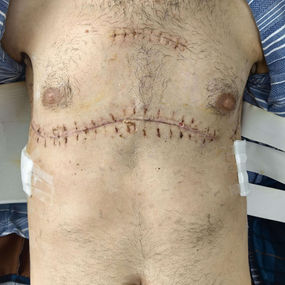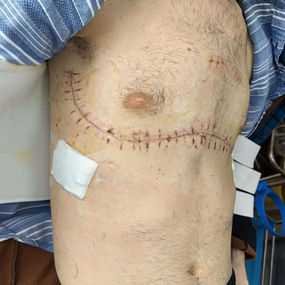
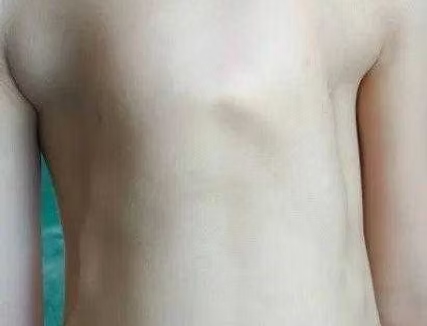
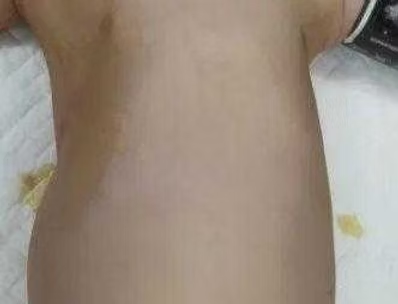
The patient is a 32-year-old male who has had a sunken anterior chest wall since childhood. At the age of 5, he was diagnosed with pectus excavatum and underwent a Ravitch procedure. However, the corrective effect was poor, and a significant depression remained after surgery. As he grew older, the depression in his chest wall became more severe. This issue intensified after he entered puberty, resulting in breathing discomfort following physical activities. At the age of 21, he underwent a second chest wall surgery, specifically, the Nuss procedure, which did not alleviate his deformity but actually exacerbated it. His chest wall developed severe, complex deformities and progressively narrowed, leading to secondary thoracic dystrophy. Both the patient and his family became extremely discouraged by the outcome of the surgery.
Later, he decided against further attempts to correct the deformed bone structure and instead opted for cosmetic surgery, hoping to improve the appearance of his chest wall with implants. However, this surgery also failed to meet his expectations. The aesthetic appearance of his chest did not improve, and as he aged, the thoracic cage continued to narrow, leading to complications such as limited mobility and breathing discomfort. Increasingly troubled by his physical and emotional distress, the patient is now contemplating another surgery to completely rid himself of the deformity.